
The Life of a Criminal Case in Utah
Every criminal case is different, presenting its own set of facts and challenges for the defense. But every criminal case also follows a predictable series of hearings and stages. There are two possible tracks in the lifespan of a criminal case in Utah, and which one applies depends on whether the most severe charge in the case is (1) a Class B Misdemeanor, Class C Misdemeanor, or Infraction, or (2) a Class A Misdemeanor or Felony of the First, Second, or Third Degree.
It sounds more complicated than it is. Let's break it down.
Class B & Class C Misdemeanors & Infractions
There are three distinct phases for a criminal case in which the most severe charge is either a Class B Misdemeanor, Class C Misdemeanor, or Infraction. These three phases are the Arraignment, the pretrial phase, and trial.
Note that the parties to the case can reach a resolution at any stage in the process. The most common form of resolution is a plea to certain charges that then leads to a Sentencing Hearing, which is explained below.
Arraignment
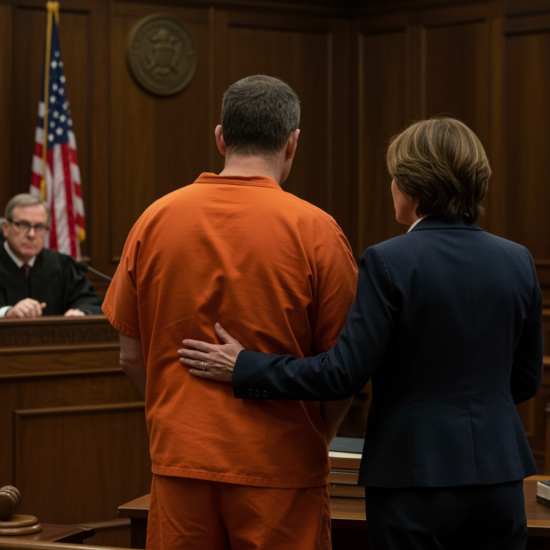
At the Arraignment hearing, you will be required to enter a plea to the crime charged. If you plead “not guilty,” motion hearings and eventually a trial will be scheduled. If you plead “guilty” or “no contest,” sentencing will be scheduled.
By far the most common practice at this hearing is to plead “not guilty” so that you and your attorney have enough time to review the evidence together and try to negotiate a favorable resolution with the prosecution.
Pretrial Conferences
In the Pretrial Conference phrase of a criminal case, the parties (the prosecution and the defense) seek to resolve the case without scheduling a trial, which is an all-or-nothing proposition. Several Pretrial Conferences (usually 4 to 6 weeks apart) may take place at this stage as each side examines the quality of the State's (or City's) evidence and continues working towards a settlement. During this phase, you should be working closely with your attorney. You may discuss witnesses or other evidence that can help strengthen your side of the story. The State or defense may also file motions with the court to determine the admissibility of certain evidence at a future trial.
If you do request a trial, it's not uncommon for the court to schedule it several months down the road. Judges' calendars are usually bogged down with thousands of cases, making trial dates hard to come by.
Trial
If the parties are unable to reach a resolution after the often lengthy pretrial phase of the case, a trial will eventually be set. A Defendant can request a bench trial, in which the judge will hear the evidence and decide what facts are true, and ultimately whether the prosecution met its burden of proving the Defendant guilty “beyond a reasonable doubt.” A Defendant also has the right to demand a jury trial, in which their peers will listen to the evidence and decide the Defendant’s guilt or innocence.
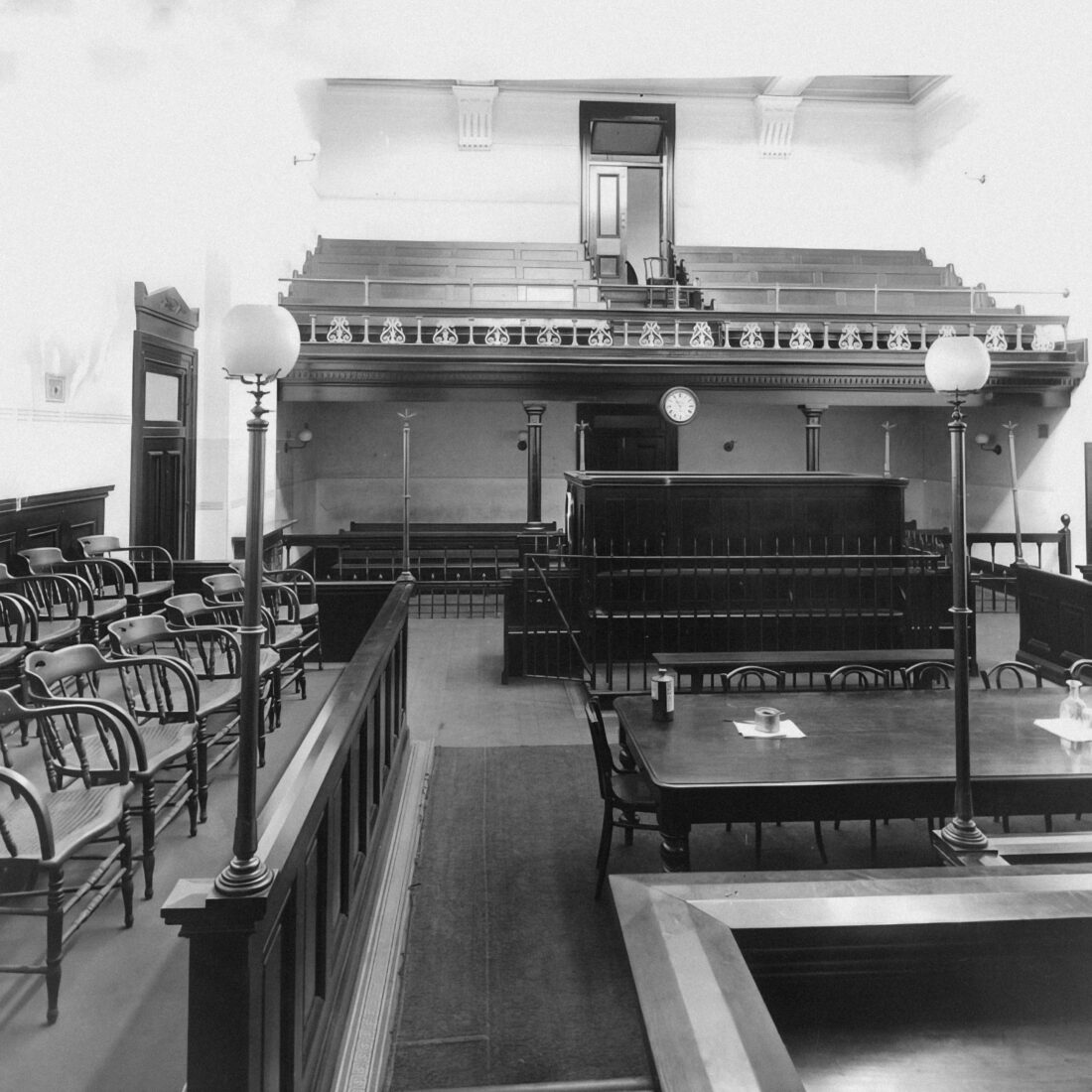
Which type of trial is best for your case is discussion you should have with your attorney. It is also often the case that a jury trial will be scheduled farther into the future than a bench trial due to former taking longer to conduct than the latter.
Class A Misdemeanors & Felonies
If you are charged with a more severe offense, including a Class A Misdemeanor or Felony, additional hearings will take place before the Arraignment hearing explained above. These are the Initial Appearance, Waiver Hearing, and Preliminary Hearing. After these hearings, the remaining phases of Arraignment, pretrial negotiations, and trial will occur (just like in Class B Misdemeanor cases).
Initial Appearance
At the Initial Appearance, you will be formally notified of the charges and provided a copy of the Information (the charging document). The court will ensure that it has your contact information and (if you are not already represented by an attorney) that you are advised of your right to legal representation. If the defendant is currently in custody, a bail hearing may be requested to address custody status during the pendency of the case. Furthermore, the prosecution may demand that the court put in place certain pretrial orders, such as protective orders in favor of alleged victims to prevent the defendant from having contact with them, as well as pretrial orders to ensure the defendant does not flee the jurisdiction and attends future court hearings.
Waiver Hearing (a.k.a. Roll Call, Decision to Prelim)
Your case may involve one or more Waiver Hearings. These hearings are conducted primarily to determine if you and the State of Utah can reach a plea bargain. This is called Waiver Hearing because the court will ultimately ask whether you intend to “waive” your right to a Preliminary Hearing (discussed below). Whether to waive your right is an important discussion to have with your attorney as you receive the State’s evidence and review it together. If you do waive your right to a preliminary hearing, you do not lose your right to a trial—only your right to make the State prove to the court that the filed charges are not frivolous.
Preliminary Hearing
At a Preliminary Hearing, the prosecutor must convince the judge there is enough probable cause to file the charges contained in the Information. This is a much lower standard than proof “beyond a reasonable doubt” that would apply at a final trial deciding your guilt or innocence once and for all.
Preliminary hearings are usually brief because the judge only hears enough evidence and testimony to decide whether probable cause exists. The judge must give the prosecutor the benefit of the doubt on close calls. Nevertheless, cases can be dismissed if the State’s witnesses do not appear or the State is otherwise unable to carry its burden that probable cause exists to file the charges.
Sentencing
If you plead “guilty” or “no contest” or are found guilty by a judge or jury, you will be sentenced at a final hearing. This will take place within six weeks after your trial or the date you enter a guilty or no contest plea. If you were found guilty of a felony, then during this six-week period prior to sentencing, you will most likely be required to cooperate with an agent of Adult Probation & Parole (AP&P) who will prepare a pre-sentence report. AP&P will compile your background information and make a recommendation for a sentence based on the guidelines under Utah law and the specific facts of your case.
At the sentencing hearing, the court may order (among other things) mental health or substance use treatment, fines, restitution payments to victim(s), good behavior, and a commitment to jail or to the custody of the Department of Corrections (prison). An appeal may be possible if the court overstepped its legal authority or some other irregularity occurred during the trial.
Probation, Review Hearings, & Orders to Show Cause
Your sentence may include the privilege of probation, which is an agreement between you and the judge that your jail or prison sentence be suspended in whole or in part as long as you abide by certain terms. The probation period for felonies is usually 36 months, and for misdemeanors it is generally 12 to 18 months. Probation terms may include jail time and fines, and may also require you to keep monthly meetings with your probation officer, stay employed, obtain drug/alcohol evaluations and substance use counseling and drug testing, submit to searches by your probation officer, participate in mental health counseling and life skills courses, stay away from certain persons or places, and other orders the judge deems appropriate.
If you fail to comply with the terms of probation, you will likely be ordered back before the judge to “show cause” why your probation should not be revoked and sanctions entered. You are entitled to legal representation at these hearings. If the judge determines you violated probation, it may be revoked and reinstated for the same term with additional sanctions (such community service, intensive supervision, jail time, etc.) or revoked entirely, in which case the court often orders more severe sanctions. If you are on felony probation, a commitment to the Department of Corrections to serve a prison sentence is possible.
Clearing Your Record
Just because you’ve been convicted of a crime doesn’t mean you’ll never pass another background check. As long as you meet certain eligibility requirements, there are ways to return you record to its once spotless state. A 402 reduction can reduce the severity of the conviction by one step (for example, from a Class B Misdemeanor down to a Class C Misdemeanor) or even two steps (with the stipulation of the prosecutor). And expungement allows you to remove any record of the conviction from public record once and for all.
Bottom Line: Don't Go It Alone

The most important take away from this outline is that the life of a criminal case in Utah is a journey you should not undertake by yourself. Only a licensed attorney is fully equipped to guide you through the minefield of issues that often arise, such as ensuring full disclosure of discovery, understanding evidence admissibility at trial, and achieving the best possible outcome for your case.
Contact us today for your free consultation.